
Ephesians 1:1-2 | February 1st
Sermon Overview
Living in Christ While in Culture: Lessons from Ephesians
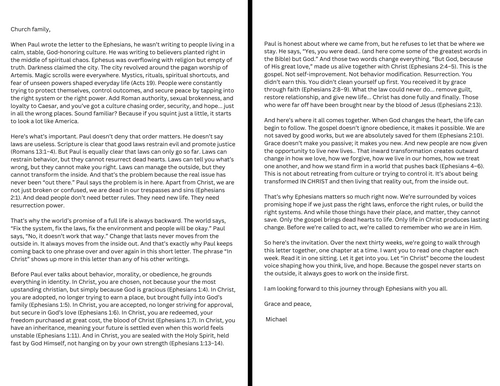
In a world that often feels hostile to faith, how do we live authentically as Christians without either withdrawing from society or compromising our beliefs? The book of Ephesians provides a powerful roadmap for navigating this challenge, teaching us how to live in Christ while engaging our culture.
Why Ephesians Matters for Today's Christians
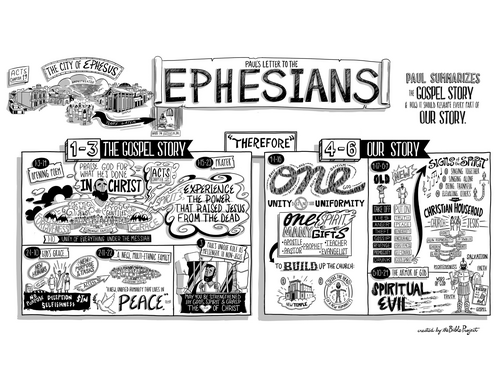
Ephesians may be only six chapters and 155 verses, but it's been called the "Grand Canyon of Scripture" for good reason. This letter contains profound truths that deserve careful study rather than casual reading. Paul wrote to believers in Ephesus who faced remarkably similar cultural challenges to what we experience today.
The phrase "in Christ" appears throughout this short letter with unusual frequency - representing 20% of Paul's usage of this concept across all his writings. This isn't coincidental; it's the backbone of Paul's message about Christian living.
What Was Ephesus Really Like?
To understand Paul's message, we need to grasp the culture he was addressing. Ephesus was a wealthy, cosmopolitan port city - the capital of eastern Rome. It was highly educated, spiritually pluralistic, and morally permissive.
A Culture of Spiritual Confusion
Ephesus housed around 50 temples, including the Temple of Diana (one of the seven wonders of the ancient world). Sexual immorality wasn't hidden but marketed as spiritual practice. People were deeply spiritual but not in holy ways - chasing experiences and energy while rejecting absolute truth.
Sound familiar? Like our modern context, Ephesus was a place where everyone believed in something, but truth was considered relative. Following Jesus earned you labels like "judgmental" and "close-minded," not because believers were trying to be offensive, but because God's truth naturally draws lines.
How the Church in Ephesus Began
The Ephesian church's origin story reveals God's providence in action. It started with a disruption - Emperor Claudius expelled all Jews from Rome in AD 49, including a faithful couple named Priscilla and Aquila.
Divine Appointments and Faithful Stewardship
What seemed like disaster became direction. Priscilla and Aquila ended up in Corinth, where they met Paul during his second missionary journey. They shared the same trade - tentmaking - and became ministry partners.
When Paul briefly visited Ephesus, he left this faithful couple to steward the growing church. They later discipled Apollos, who became a powerful preacher. Paul returned for nearly three years during his third missionary journey, establishing a thriving church that impacted the entire region.
Four Essential Questions for Living in Christ
In just two verses - Ephesians 1:1-2 - Paul establishes the DNA for Christian living. These verses address four crucial questions every believer must answer:
1. Who Gets the Final Word in Your Life? (Authority)
Paul identifies himself as "an apostle of Jesus Christ by the will of God." He immediately establishes that authority flows from God, not human opinion or cultural trends.
God's Word doesn't ask for our feedback or opinion. It asks for our obedience. This is foundational - if we want to live faithfully in Christ, we must submit to His ultimate authority rather than our own preferences or society's pressures.
2. Who Am I Now That I'm in Christ? (Identity)
Paul addresses his readers as "saints" - not because they've earned it, but because they've placed their faith in Jesus. A saint is simply someone set apart for God's purposes.
Your identity isn't found in your past, your performance, or your position in society. If you've trusted in Christ, you are a saint - set apart with a new identity and new possibilities for living.
3. Where Am I Really Living? (Location)
Paul writes to saints "who are in Ephesus and faithful in Christ Jesus." Notice the two locations: geographic (Ephesus) and spiritual (in Christ).
You live in your physical location - your city, your workplace, your neighborhood. But as a believer, you also have the opportunity to live spiritually "in Christ." This dual citizenship changes everything about how you engage your environment.
4. How Am I Going to Do This? (Power)
Paul's greeting includes "Grace to you and peace from God our Father and the Lord Jesus Christ." Notice the order - grace comes first, then peace follows.
You don't find peace by trying harder. You find peace by trusting deeper. God's grace provides the power you need to live faithfully in a challenging culture. The key is receiving His grace and living from that foundation rather than your own strength.
The Danger of Drifting
Even with right beliefs and good works, it's possible to drift from our first love. In Revelation 2, Jesus addresses the Ephesian church decades later. Despite their doctrinal accuracy and faithful service, they had lost their love for Christ.
You Can Do the Work of Christ and Drift from the Heart of Christ
This drift doesn't happen overnight. It's gradual - somewhere along the way, they stopped living in Christ while continuing to work for Christ. Their hearts grew cold even as their hands stayed busy.
Jesus' prescription is simple: "Remember from where you have fallen, repent and do the deeds you did at first." Return to the basics. Reconnect with your first love.
Life Application
Living in Christ while engaging culture requires more than willpower - it requires union with Him through His power. This week, commit to getting back into God's Word consistently. Consider reading one chapter of Ephesians each day, allowing these truths to shape your heart and perspective.
When facing cultural pressures or personal challenges, return to the four foundational questions: Is God's authority ruling my decisions? Am I living from my identity as a saint? Am I choosing to live "in Christ" rather than just in my circumstances? Am I depending on His grace for the power I need?
Questions for Reflection:
The same God who worked through faithful believers in ancient Ephesus wants to work through you in your modern context. The question isn't whether you can live faithfully in a challenging culture - it's whether you'll choose to live in Christ while doing so.
In a world that often feels hostile to faith, how do we live authentically as Christians without either withdrawing from society or compromising our beliefs? The book of Ephesians provides a powerful roadmap for navigating this challenge, teaching us how to live in Christ while engaging our culture.
Why Ephesians Matters for Today's Christians
Ephesians may be only six chapters and 155 verses, but it's been called the "Grand Canyon of Scripture" for good reason. This letter contains profound truths that deserve careful study rather than casual reading. Paul wrote to believers in Ephesus who faced remarkably similar cultural challenges to what we experience today.
The phrase "in Christ" appears throughout this short letter with unusual frequency - representing 20% of Paul's usage of this concept across all his writings. This isn't coincidental; it's the backbone of Paul's message about Christian living.
What Was Ephesus Really Like?
To understand Paul's message, we need to grasp the culture he was addressing. Ephesus was a wealthy, cosmopolitan port city - the capital of eastern Rome. It was highly educated, spiritually pluralistic, and morally permissive.
A Culture of Spiritual Confusion
Ephesus housed around 50 temples, including the Temple of Diana (one of the seven wonders of the ancient world). Sexual immorality wasn't hidden but marketed as spiritual practice. People were deeply spiritual but not in holy ways - chasing experiences and energy while rejecting absolute truth.
Sound familiar? Like our modern context, Ephesus was a place where everyone believed in something, but truth was considered relative. Following Jesus earned you labels like "judgmental" and "close-minded," not because believers were trying to be offensive, but because God's truth naturally draws lines.
How the Church in Ephesus Began
The Ephesian church's origin story reveals God's providence in action. It started with a disruption - Emperor Claudius expelled all Jews from Rome in AD 49, including a faithful couple named Priscilla and Aquila.
Divine Appointments and Faithful Stewardship
What seemed like disaster became direction. Priscilla and Aquila ended up in Corinth, where they met Paul during his second missionary journey. They shared the same trade - tentmaking - and became ministry partners.
When Paul briefly visited Ephesus, he left this faithful couple to steward the growing church. They later discipled Apollos, who became a powerful preacher. Paul returned for nearly three years during his third missionary journey, establishing a thriving church that impacted the entire region.
Four Essential Questions for Living in Christ
In just two verses - Ephesians 1:1-2 - Paul establishes the DNA for Christian living. These verses address four crucial questions every believer must answer:
1. Who Gets the Final Word in Your Life? (Authority)
Paul identifies himself as "an apostle of Jesus Christ by the will of God." He immediately establishes that authority flows from God, not human opinion or cultural trends.
God's Word doesn't ask for our feedback or opinion. It asks for our obedience. This is foundational - if we want to live faithfully in Christ, we must submit to His ultimate authority rather than our own preferences or society's pressures.
2. Who Am I Now That I'm in Christ? (Identity)
Paul addresses his readers as "saints" - not because they've earned it, but because they've placed their faith in Jesus. A saint is simply someone set apart for God's purposes.
Your identity isn't found in your past, your performance, or your position in society. If you've trusted in Christ, you are a saint - set apart with a new identity and new possibilities for living.
3. Where Am I Really Living? (Location)
Paul writes to saints "who are in Ephesus and faithful in Christ Jesus." Notice the two locations: geographic (Ephesus) and spiritual (in Christ).
You live in your physical location - your city, your workplace, your neighborhood. But as a believer, you also have the opportunity to live spiritually "in Christ." This dual citizenship changes everything about how you engage your environment.
4. How Am I Going to Do This? (Power)
Paul's greeting includes "Grace to you and peace from God our Father and the Lord Jesus Christ." Notice the order - grace comes first, then peace follows.
You don't find peace by trying harder. You find peace by trusting deeper. God's grace provides the power you need to live faithfully in a challenging culture. The key is receiving His grace and living from that foundation rather than your own strength.
The Danger of Drifting
Even with right beliefs and good works, it's possible to drift from our first love. In Revelation 2, Jesus addresses the Ephesian church decades later. Despite their doctrinal accuracy and faithful service, they had lost their love for Christ.
You Can Do the Work of Christ and Drift from the Heart of Christ
This drift doesn't happen overnight. It's gradual - somewhere along the way, they stopped living in Christ while continuing to work for Christ. Their hearts grew cold even as their hands stayed busy.
Jesus' prescription is simple: "Remember from where you have fallen, repent and do the deeds you did at first." Return to the basics. Reconnect with your first love.
Life Application
Living in Christ while engaging culture requires more than willpower - it requires union with Him through His power. This week, commit to getting back into God's Word consistently. Consider reading one chapter of Ephesians each day, allowing these truths to shape your heart and perspective.
When facing cultural pressures or personal challenges, return to the four foundational questions: Is God's authority ruling my decisions? Am I living from my identity as a saint? Am I choosing to live "in Christ" rather than just in my circumstances? Am I depending on His grace for the power I need?
Questions for Reflection:
- In what areas of your life are you tempted to override God's authority with your own preferences?
- How does understanding your identity as a "saint" change the way you see yourself and your purpose?
- Where might you be doing the work of Christ while drifting from the heart of Christ?
- What would it look like for you to trust God more deeply rather than trying harder in your own strength?
The same God who worked through faithful believers in ancient Ephesus wants to work through you in your modern context. The question isn't whether you can live faithfully in a challenging culture - it's whether you'll choose to live in Christ while doing so.
Day 1: When Disruption Becomes Direction
Devotional
Life has a way of throwing curveballs that leave us questioning God's plan. Emperor Claudius expelled Jews from Rome, forcing faithful tentmakers Priscilla and Aquila to flee to Corinth. What looked like disaster became the very pathway God used to establish the thriving church in Ephesus.
Sometimes what feels like your world falling apart is actually God setting up something beautiful. When we're in the middle of unexpected changes - job loss, relationship struggles, health challenges, or family upheaval - it's natural to wonder where God is. But what if these moments aren't evidence of God's absence, but rather His providence at work? What if the very thing that's disrupting your comfort zone is directing you toward His greater purpose?
The story of Priscilla and Aquila reminds us that God's plans often unfold through circumstances we never would have chosen. Their forced relocation became the foundation for one of the most influential churches in the New Testament.
Your current struggle might be the very thing God is using to position you for something greater than you could imagine.
Trust doesn't mean understanding every detail of God's plan. It means believing that He's working even when we can't see it. Today, instead of fighting against your circumstances, consider how God might be using them to direct your steps toward His purposes.
Bible Verse
'Paul, an apostle of Christ Jesus by the will of God, to the saints who are in Ephesus, and are faithful in Christ Jesus: Grace to you and peace from God our Father and the Lord Jesus Christ.' - Ephesians 1:1-2
Reflection Question
What current disruption in your life might actually be God's way of directing you toward His greater purpose for you?
Quote
Do you know that in God's world, there's no coincidences? There's no just so it happens. It's called the providence of God. And what looks like disruption in your life and all of a sudden becomes something directing you to God.
Prayer
Father, help me trust Your providence even when life feels chaotic. Give me eyes to see how You might be using my current circumstances to direct me toward Your purposes. Help me rest in Your sovereignty today.
Life has a way of throwing curveballs that leave us questioning God's plan. Emperor Claudius expelled Jews from Rome, forcing faithful tentmakers Priscilla and Aquila to flee to Corinth. What looked like disaster became the very pathway God used to establish the thriving church in Ephesus.
Sometimes what feels like your world falling apart is actually God setting up something beautiful. When we're in the middle of unexpected changes - job loss, relationship struggles, health challenges, or family upheaval - it's natural to wonder where God is. But what if these moments aren't evidence of God's absence, but rather His providence at work? What if the very thing that's disrupting your comfort zone is directing you toward His greater purpose?
The story of Priscilla and Aquila reminds us that God's plans often unfold through circumstances we never would have chosen. Their forced relocation became the foundation for one of the most influential churches in the New Testament.
Your current struggle might be the very thing God is using to position you for something greater than you could imagine.
Trust doesn't mean understanding every detail of God's plan. It means believing that He's working even when we can't see it. Today, instead of fighting against your circumstances, consider how God might be using them to direct your steps toward His purposes.
Bible Verse
'Paul, an apostle of Christ Jesus by the will of God, to the saints who are in Ephesus, and are faithful in Christ Jesus: Grace to you and peace from God our Father and the Lord Jesus Christ.' - Ephesians 1:1-2
Reflection Question
What current disruption in your life might actually be God's way of directing you toward His greater purpose for you?
Quote
Do you know that in God's world, there's no coincidences? There's no just so it happens. It's called the providence of God. And what looks like disruption in your life and all of a sudden becomes something directing you to God.
Prayer
Father, help me trust Your providence even when life feels chaotic. Give me eyes to see how You might be using my current circumstances to direct me toward Your purposes. Help me rest in Your sovereignty today.
Day 2: The Authority Question
Devotional
In our culture of endless opinions and personal autonomy, the question of authority feels almost offensive. Yet it's the first and most crucial question we must answer: Who gets the final word in your life? Your feelings? Social media? Popular culture? Or God's Word?
Paul understood that the Ephesians lived in a pluralistic society where everyone had their own truth. Sound familiar? Just like today, they were bombarded with competing voices claiming authority over their lives. But Paul reminds us that God's Word doesn't ask for our feedback or opinion - it asks for our obedience. This isn't about blind submission to harsh rules. It's about recognizing that the Creator of the universe might actually know what's best for His creation.
When we submit to God's authority, we're not losing our freedom - we're finding it. We're discovering the life we were designed to live. Think about the areas where you struggle most with obedience. Is it your finances? Your relationships? Your words? Your time? These are often the very areas where we're still trying to maintain control instead of trusting God's wisdom. Surrendering authority to God isn't a one-time decision - it's a daily choice to trust His way over our own.
Living under God's authority in a rebellious culture isn't easy, but it's the foundation for everything else. When we settle this question, we can navigate any cultural pressure with confidence.
Bible Verse
'Now when they heard this, they were pierced to the heart, and said to Peter and the rest of the apostles, "Brothers, what shall we do?"' - Acts 2:37
Reflection Question
In what specific area of your life are you still trying to maintain control instead of submitting to God's authority?
Quote
God's word doesn't ask for our feedback, it doesn't ask for our opinion. Sure, we need to know what it says, and there's some things we gotta interpret and figure some things out. But ultimately it's God's Word, not our word. It doesn't ask for your feedback. It asks for one thing, and that's your obedience.
Prayer
Lord, I confess that I often want to be my own authority. Help me surrender control and trust Your wisdom over my own understanding. Give me the courage to obey even when it's difficult.
In our culture of endless opinions and personal autonomy, the question of authority feels almost offensive. Yet it's the first and most crucial question we must answer: Who gets the final word in your life? Your feelings? Social media? Popular culture? Or God's Word?
Paul understood that the Ephesians lived in a pluralistic society where everyone had their own truth. Sound familiar? Just like today, they were bombarded with competing voices claiming authority over their lives. But Paul reminds us that God's Word doesn't ask for our feedback or opinion - it asks for our obedience. This isn't about blind submission to harsh rules. It's about recognizing that the Creator of the universe might actually know what's best for His creation.
When we submit to God's authority, we're not losing our freedom - we're finding it. We're discovering the life we were designed to live. Think about the areas where you struggle most with obedience. Is it your finances? Your relationships? Your words? Your time? These are often the very areas where we're still trying to maintain control instead of trusting God's wisdom. Surrendering authority to God isn't a one-time decision - it's a daily choice to trust His way over our own.
Living under God's authority in a rebellious culture isn't easy, but it's the foundation for everything else. When we settle this question, we can navigate any cultural pressure with confidence.
Bible Verse
'Now when they heard this, they were pierced to the heart, and said to Peter and the rest of the apostles, "Brothers, what shall we do?"' - Acts 2:37
Reflection Question
In what specific area of your life are you still trying to maintain control instead of submitting to God's authority?
Quote
God's word doesn't ask for our feedback, it doesn't ask for our opinion. Sure, we need to know what it says, and there's some things we gotta interpret and figure some things out. But ultimately it's God's Word, not our word. It doesn't ask for your feedback. It asks for one thing, and that's your obedience.
Prayer
Lord, I confess that I often want to be my own authority. Help me surrender control and trust Your wisdom over my own understanding. Give me the courage to obey even when it's difficult.
Day 3: You Are a Saint
Devotional
If someone called you a saint today, you'd probably laugh or feel uncomfortable. We tend to think of saints as super-spiritual people who never struggle, never doubt, and certainly never mess up. But that's not what the Bible teaches.
Paul addresses the Ephesians as saints - not because they were perfect, but because they had placed their faith in Jesus. Your identity isn't based on your performance. You didn't earn sainthood through good behavior, and you can't lose it through bad behavior. You're not on spiritual probation, hoping to one day graduate to saint status. If you've placed your faith in Jesus, you are a saint right now, today, in this moment. This truth changes everything about how you see yourself and how you live. When you know who you are in Christ, you don't have to prove your worth or earn God's love. You can rest in the security of your identity and live from that place of acceptance rather than striving for it.
The enemy loves to whisper lies about your identity - that you're not good enough, that you've messed up too much, that God is disappointed in you. But God calls you His saint, His beloved, His child. Which voice will you believe? When you truly grasp your identity as a saint, it transforms how you approach every challenge, every relationship, every decision. You're not trying to become someone worthy of God's love - you already are.
Bible Verse
'Paul, an apostle of Christ Jesus by the will of God, to the saints who are in Ephesus, and are faithful in Christ Jesus' - Ephesians 1:1
Reflection Question
How would your daily life change if you truly believed and lived from your identity as God's beloved saint?
Quote
A saint is someone who. You didn't work for it. You're not on probation right now. One day you'll get it. You're not halfway there to get. A saint is someone who's placed their faith in Jesus. You are a saint.
Prayer
Father, thank You for calling me Your saint not because of what I've done, but because of what Jesus has done. Help me live from this secure identity rather than striving to earn Your love.
If someone called you a saint today, you'd probably laugh or feel uncomfortable. We tend to think of saints as super-spiritual people who never struggle, never doubt, and certainly never mess up. But that's not what the Bible teaches.
Paul addresses the Ephesians as saints - not because they were perfect, but because they had placed their faith in Jesus. Your identity isn't based on your performance. You didn't earn sainthood through good behavior, and you can't lose it through bad behavior. You're not on spiritual probation, hoping to one day graduate to saint status. If you've placed your faith in Jesus, you are a saint right now, today, in this moment. This truth changes everything about how you see yourself and how you live. When you know who you are in Christ, you don't have to prove your worth or earn God's love. You can rest in the security of your identity and live from that place of acceptance rather than striving for it.
The enemy loves to whisper lies about your identity - that you're not good enough, that you've messed up too much, that God is disappointed in you. But God calls you His saint, His beloved, His child. Which voice will you believe? When you truly grasp your identity as a saint, it transforms how you approach every challenge, every relationship, every decision. You're not trying to become someone worthy of God's love - you already are.
Bible Verse
'Paul, an apostle of Christ Jesus by the will of God, to the saints who are in Ephesus, and are faithful in Christ Jesus' - Ephesians 1:1
Reflection Question
How would your daily life change if you truly believed and lived from your identity as God's beloved saint?
Quote
A saint is someone who. You didn't work for it. You're not on probation right now. One day you'll get it. You're not halfway there to get. A saint is someone who's placed their faith in Jesus. You are a saint.
Prayer
Father, thank You for calling me Your saint not because of what I've done, but because of what Jesus has done. Help me live from this secure identity rather than striving to earn Your love.
Day 4: Living in Two Locations
Devotional
You have an address - a physical location where you live, work, and navigate daily life. But if you're a believer, you also have a spiritual location: you are seated with Christ in heavenly places. This isn't just theological poetry; it's a practical reality that changes how you live in your earthly location.
Your geographic location might be challenging. You might live in a place where faith is mocked, where biblical values are rejected, or where you feel like a stranger. But your spiritual location is secure, peaceful, and filled with every spiritual blessing in Christ. You don't have to choose between these locations - you live in both simultaneously.
When you remember your spiritual location, your earthly circumstances lose their power to define you.
The hostile culture around you doesn't determine your peace. The chaos in your community doesn't determine your security. You're anchored in heavenly places while actively engaged in earthly places. This dual citizenship means you can engage your culture without being enslaved by it. You can love your neighbors without adopting their values. You can work for justice and mercy in your community while drawing your strength from your heavenly position.
Everything you need to live this spiritual life is found in the heavenly places, in Christ. When you feel overwhelmed by your earthly circumstances, remember where you really live. When you feel powerless in your physical location, draw from the resources of your spiritual location.
Bible Verse
'And raised us up with him and seated us with him in the heavenly places in Christ Jesus' - Ephesians 2:6
Reflection Question
How can remembering your spiritual location in Christ change how you respond to the challenges in your physical location today?
Quote
You have two locations. Your geographic location, your spiritual location. If you have placed your faith in Jesus, you're a saint and the opportunity is here before you to live in Christ.
Prayer
Lord, thank You for seating me with You in heavenly places. Help me live from that secure position as I navigate the challenges of my earthly location. Give me Your perspective on my circumstances.
You have an address - a physical location where you live, work, and navigate daily life. But if you're a believer, you also have a spiritual location: you are seated with Christ in heavenly places. This isn't just theological poetry; it's a practical reality that changes how you live in your earthly location.
Your geographic location might be challenging. You might live in a place where faith is mocked, where biblical values are rejected, or where you feel like a stranger. But your spiritual location is secure, peaceful, and filled with every spiritual blessing in Christ. You don't have to choose between these locations - you live in both simultaneously.
When you remember your spiritual location, your earthly circumstances lose their power to define you.
The hostile culture around you doesn't determine your peace. The chaos in your community doesn't determine your security. You're anchored in heavenly places while actively engaged in earthly places. This dual citizenship means you can engage your culture without being enslaved by it. You can love your neighbors without adopting their values. You can work for justice and mercy in your community while drawing your strength from your heavenly position.
Everything you need to live this spiritual life is found in the heavenly places, in Christ. When you feel overwhelmed by your earthly circumstances, remember where you really live. When you feel powerless in your physical location, draw from the resources of your spiritual location.
Bible Verse
'And raised us up with him and seated us with him in the heavenly places in Christ Jesus' - Ephesians 2:6
Reflection Question
How can remembering your spiritual location in Christ change how you respond to the challenges in your physical location today?
Quote
You have two locations. Your geographic location, your spiritual location. If you have placed your faith in Jesus, you're a saint and the opportunity is here before you to live in Christ.
Prayer
Lord, thank You for seating me with You in heavenly places. Help me live from that secure position as I navigate the challenges of my earthly location. Give me Your perspective on my circumstances.
Day 5: Grace, Not Willpower
Devotional
We live in a culture obsessed with self-improvement, personal strength, and trying harder. But when it comes to living the Christian life, willpower will always fail you. You cannot live in Christ through sheer determination or positive thinking. The power to live this life comes from grace, not grit. Maybe you've experienced this frustration - you decide to read your Bible more, pray more, love better, serve more. You start strong, but eventually, your willpower fades. You feel defeated, like you're not cut out for this Christian life. But what if the problem isn't your lack of effort, but your approach?
Peace doesn't come from trying harder; it comes from trusting deeper. The Christian life isn't about mustering up enough strength to follow Jesus - it's about letting His strength flow through you. It's about receiving grace rather than earning approval. This doesn't mean we become passive or careless. It means we learn to depend on God's power rather than our own. We cooperate with His grace rather than competing with it. We rest in His finished work rather than striving to complete our own.
When you feel exhausted from trying to be a good Christian, remember that Jesus didn't call you to try harder - He called you to trust Him more. Let His grace be sufficient for your weakness. Let His power be made perfect in your surrender.
Bible Verse
'But he said to me, "My grace is sufficient for you, for my power is made perfect in weakness."' - 2 Corinthians 12:9
Reflection Question
In what areas of your spiritual life have you been relying on willpower instead of trusting in God's grace and power?
Quote
You'll never find peace by trying harder. So you receive the grace, you let the power of God live in you and through you.
Prayer
Father, I confess that I often try to live the Christian life in my own strength. Help me rest in Your grace and depend on Your power. Teach me to trust You more instead of trying harder
We live in a culture obsessed with self-improvement, personal strength, and trying harder. But when it comes to living the Christian life, willpower will always fail you. You cannot live in Christ through sheer determination or positive thinking. The power to live this life comes from grace, not grit. Maybe you've experienced this frustration - you decide to read your Bible more, pray more, love better, serve more. You start strong, but eventually, your willpower fades. You feel defeated, like you're not cut out for this Christian life. But what if the problem isn't your lack of effort, but your approach?
Peace doesn't come from trying harder; it comes from trusting deeper. The Christian life isn't about mustering up enough strength to follow Jesus - it's about letting His strength flow through you. It's about receiving grace rather than earning approval. This doesn't mean we become passive or careless. It means we learn to depend on God's power rather than our own. We cooperate with His grace rather than competing with it. We rest in His finished work rather than striving to complete our own.
When you feel exhausted from trying to be a good Christian, remember that Jesus didn't call you to try harder - He called you to trust Him more. Let His grace be sufficient for your weakness. Let His power be made perfect in your surrender.
Bible Verse
'But he said to me, "My grace is sufficient for you, for my power is made perfect in weakness."' - 2 Corinthians 12:9
Reflection Question
In what areas of your spiritual life have you been relying on willpower instead of trusting in God's grace and power?
Quote
You'll never find peace by trying harder. So you receive the grace, you let the power of God live in you and through you.
Prayer
Father, I confess that I often try to live the Christian life in my own strength. Help me rest in Your grace and depend on Your power. Teach me to trust You more instead of trying harder